


LISTEN TO THIS ARTICLE
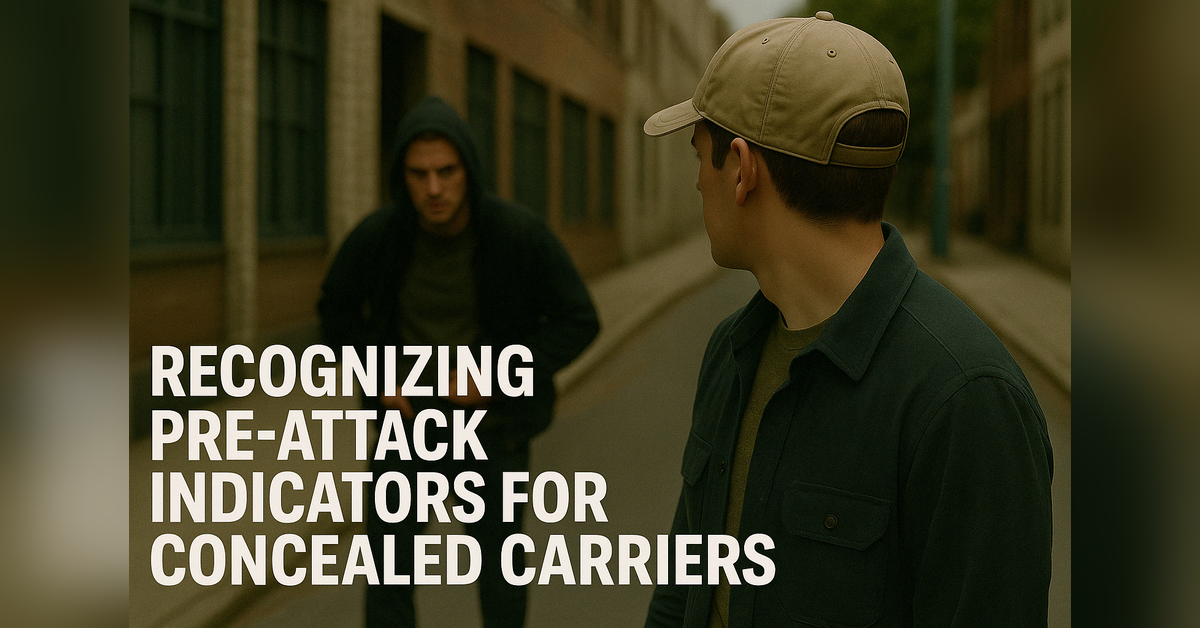
Carrying a firearm for self-defense comes with a critical responsibility: staying alert to potential threats before they turn violent. Attackers almost always give off some warning signs prior to an assault – subtle behavioral cues, body language, or environmental oddities that tip off their intentions. Learning to recognize these pre-attack indicators can help you avoid a confrontation entirely or give you precious seconds to respond.
Understanding pre-attack indicators can significantly enhance your ability to stay safe in potentially dangerous situations.



Incorporating knowledge of pre-attack indicators into your daily routine can help you recognize threats sooner.
In this article, we’ll break down common warning signs of impending violence and how you can sharpen your awareness. These principles apply whether you’re walking a city block, parking at a suburban mall, or hiking a rural trail – human predatory behavior has universal tells [1]. By staying vigilant and trusting your instincts, you can spot danger early and hopefully stay “left of bang” (before an attack) [3]. Remember, awareness is the currency that buys you time and opportunity in a crisis [4]. Let’s dive into what you should look for and how to prepare mentally and tactically.
Your ability to spot pre-attack indicators can protect you from potential harm.
Table of Contents
Situational Awareness: Your First Line of Defense
Being aware of pre-attack indicators allows you to act swiftly and decisively.
Many situations can be diffused by recognizing pre-attack indicators before they escalate.
In your interactions, always look for pre-attack indicators to maintain your safety.
By identifying pre-attack indicators, you can enhance your self-defense awareness.
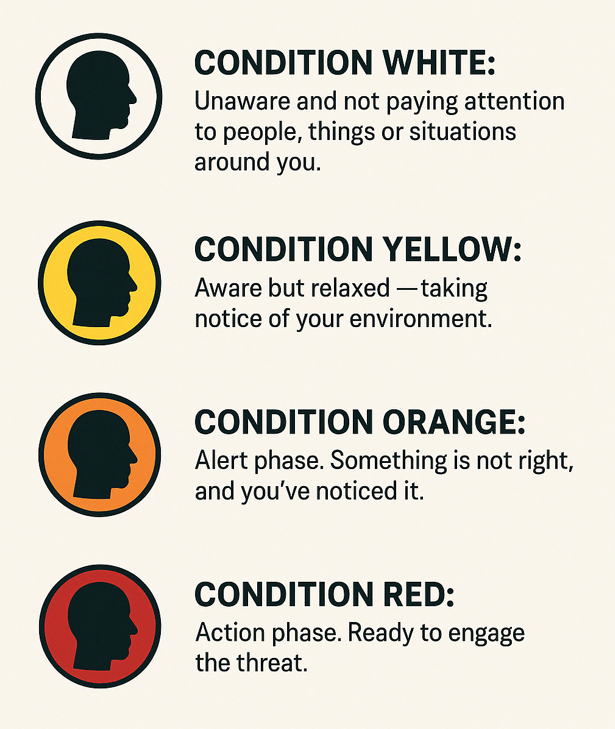
Situational awareness is the skill of actively observing your surroundings, assessing potential threats, and understanding what “normal” looks like in any environment. It starts with keeping your head up – literally. Avoid walking around in “Condition White,” oblivious and glued to your phone or lost in thought. Instead, strive to remain in Condition Yellow, a state of relaxed alertness [6]. This means you’re calm but attentively scanning the environment, noticing who and what is around you without being paranoid. In Condition Yellow, you’ll pick up on things that seem out of place or people who behave oddly, and you’ll be prepared to act if needed.
Awareness of pre-attack indicators is essential for anyone concerned about personal safety.
Always remember to look for pre-attack indicators in your surroundings.
Familiarizing yourself with pre-attack indicators can save your life.
Instincts, combined with knowledge of pre-attack indicators, can be your best defense.
Trusting your gut feeling alongside recognizing pre-attack indicators is key.
A key part of staying aware is establishing a baseline for your environment.
Ask yourself: What’s normal here right now? In a quiet residential neighborhood, the baseline might be children playing and an occasional dog walker. In a city street, it might be crowds moving along and traffic honking. Once you know the baseline, anomalies jump out at you [3].
For example, if you’re in a suburban parking lot and notice someone loitering between cars, or you’re on a rural road and see an unfamiliar parked van with its engine running, those are deviations from the norm. They might be harmless – or they might warrant closer attention [3].
Avoid distractions. Attackers often prey on people who are distracted or complacent. Don’t make it easy for them. Keep your eyes up and ears open, especially in transitional spaces like parking lots, ATMs, and gas stations where criminals often strike. Limit excessive smartphone use or headphones in public, as these can blind you to approaching danger. By staying alert, you’re more likely to notice warning signs long before a threat arises, even if it only buys you a few extra seconds to react. Those few seconds could make all the difference in surviving an encounter.
Be aware that pre-attack indicators can often be subtle and require careful observation.
Understanding pre-attack indicators enhances your overall situational awareness.
Integrating knowledge of pre-attack indicators into your life can prevent dangerous situations.
Learning about pre-attack indicators will greatly benefit your personal safety strategies.
Finally, trust your intuition about places and people. If you get a bad feeling about a situation – say a normally friendly street suddenly feels menacingly quiet, or a person gives you an unexplainable sense of dread – respect that signal. Often your gut is picking up on subtle cues that your conscious mind hasn’t yet processed. Many victims later report that they “knew something was wrong” moments before an attack [1]. If something feels off, don’t dismiss it; heighten your alertness or leave the area if possible.
Practice recognizing pre-attack indicators in various scenarios to improve your awareness.
Always be prepared to react when you identify pre-attack indicators in your vicinity.
Behavioral Red Flags and Body Language Cues
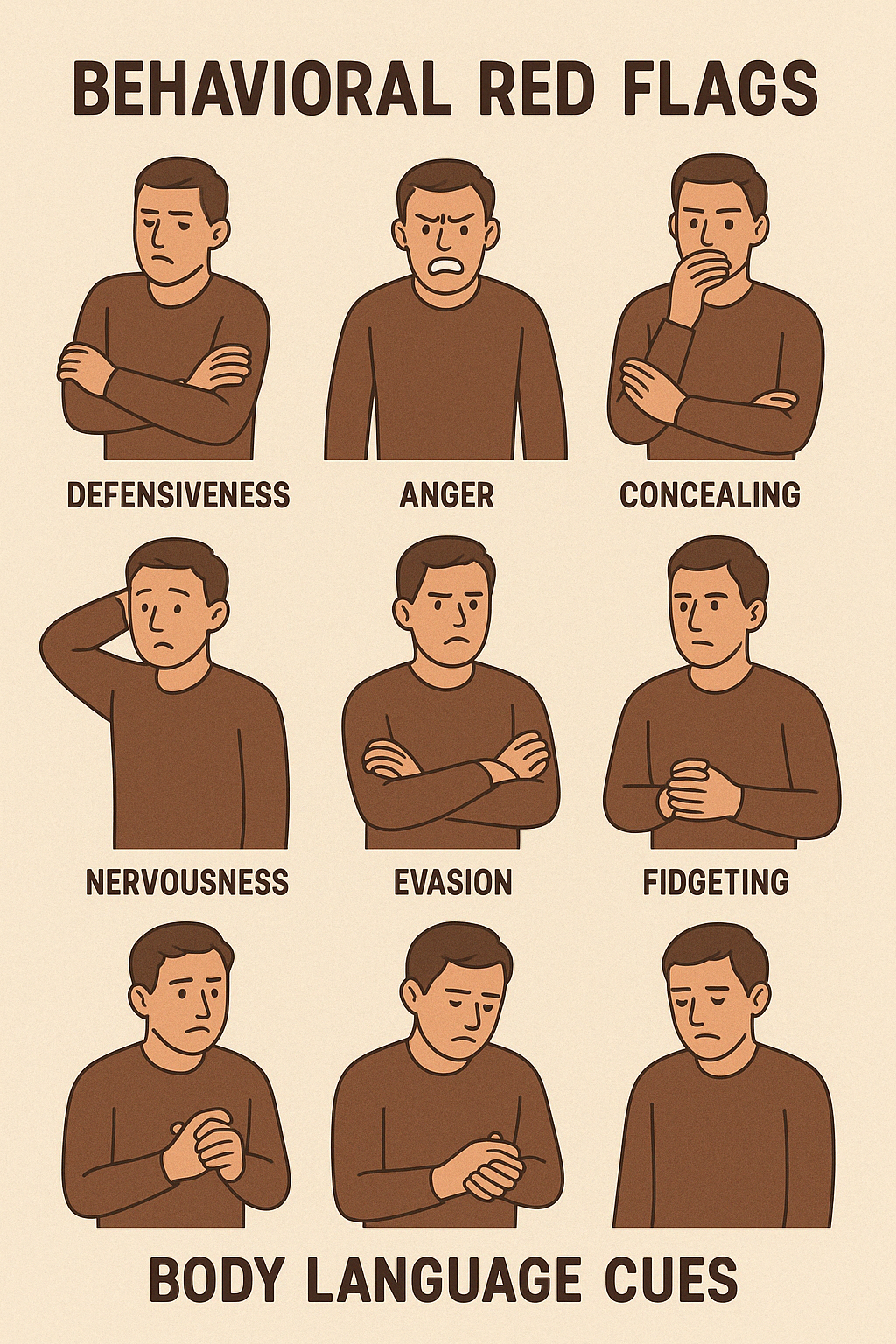
Attackers are human, and humans tend to telegraph their intentions through body language and behavior. In the moments leading up to an attack, a would-be assailant often experiences stress or excitement that leaks out in telltale ways. Here are some common pre-attack behavioral cues to watch for:
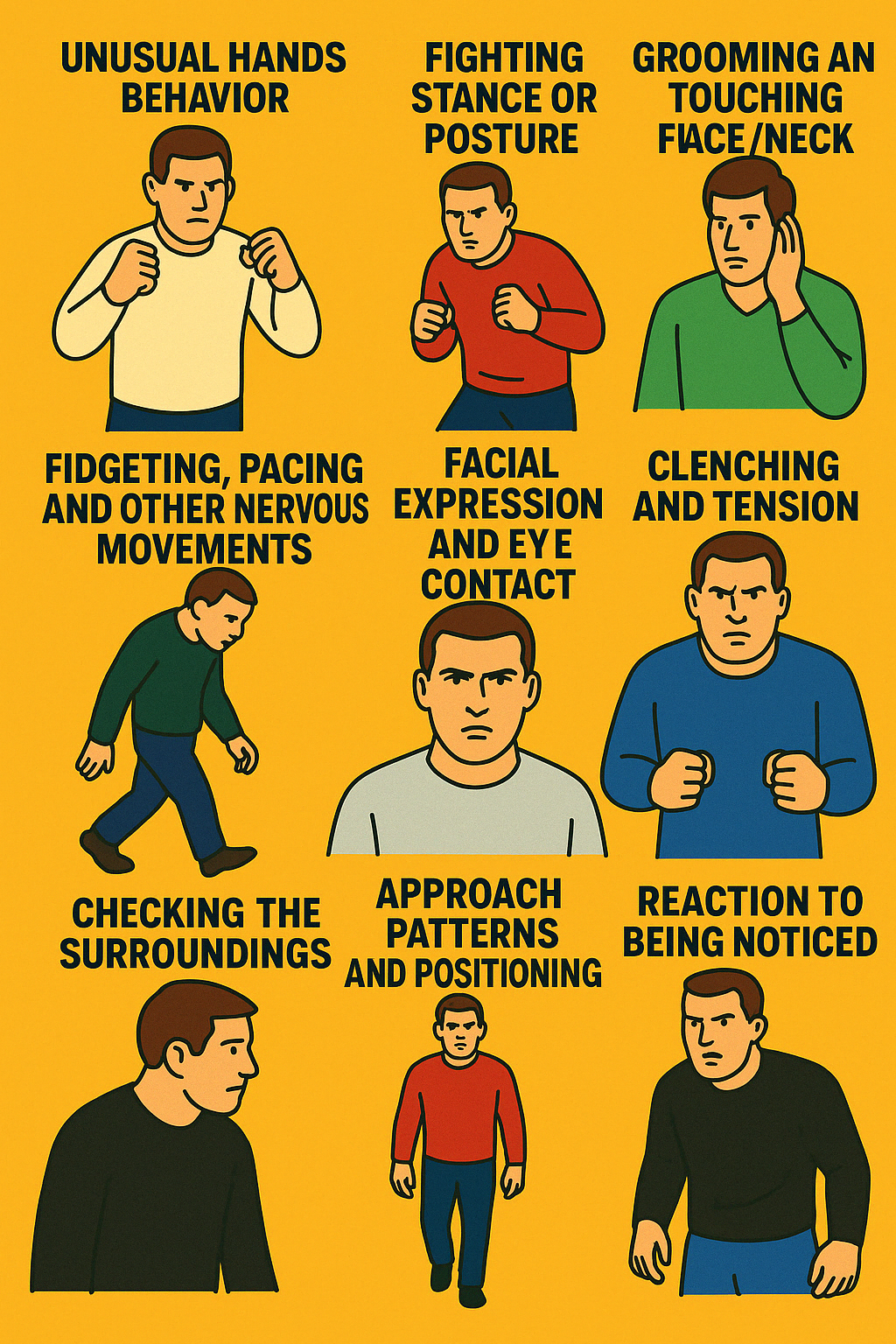
- Unusual Hands Behavior: Pay attention to people’s hands – hands kill. A calm, nonthreatening person’s hands are usually relaxed and often hanging at their sides. In contrast, someone preparing for a confrontation may raise their hands above the waist or clench their fists. Hands that suddenly disappear from view (into pockets, behind the back, under a jacket) should immediately put you on guard. A hidden hand could be reaching for a weapon. If an individual is deliberately concealing one hand while approaching you (for example, blading their body so one side is hidden), consider that a major warning sign [1].
- Fighting Stance or Posture: How a person stands can scream their intent. An aggressor often adopts a bladed stance – one foot back and the body angled – similar to a boxer’s or fighter’s stance [1]. This stance allows them to generate power and conceal a dominant hand (possibly holding a weapon) behind them. You might also see them shift weight to the balls of their feet as they prepare for rapid movement or a lunge [1]. By contrast, an average person just standing or talking will usually face you squarely in a neutral stance. If you notice someone sidestepping into a fighting posture or subtly lowering their center of gravity, alarm bells should ring.
- Grooming and Touching the Face/Neck: One of the classic pre-assault indicators is spontaneous, repetitive touching of the face, neck, or head – often called grooming cues [1]. Examples include wiping the nose, rubbing the mouth or eyes, stroking the hair, or scratching the neck when there’s no real itch. These actions are thought to be unconscious self-soothing or masking behaviors – the person’s stress is rising as they gear up for violence, and they’re trying to hide nervousness by “looking casual” with grooming gestures. Importantly, these cues tend to occur very shortly before an attack – if you see a flurry of face-touching or fidgeting while someone is zeroing in on you, an assault could be seconds away. Get ready to act.
- Fidgeting, Pacing, and Other Nervous Movements: Beyond face touching, watch for excessive fidgeting or pacing in someone’s behavior. An impending attacker might appear unnaturally agitated – repeatedly adjusting clothing, patting their waistband (potentially checking a concealed weapon), or even doing quick stretches at odd moments. Police trainers note that “wiping off imaginary lint” or sudden stretching can be an outlet for nervous energy or a way to psych up for an attack [2]. Likewise, pacing or rhythmic rocking indicates an internal struggle or adrenaline build-up. If a person seems abnormally twitchy or unable to stand still when near you, take note.
- Facial Expression and Eye Contact: The face can reveal when someone is about to explode. Watch for a clenched jaw (you might see the jaw muscles flexing) or bared teeth. A furrowed brow and narrowed, intense stare can signal anger or decision – sometimes seen just before an attack [2]. In some cases, you might catch a micro-expression – a fleeting flash of true emotion like rage or fear that the person quickly tries to hide. Eye behavior is especially telling. Normal eye contact is typically intermittent and relaxed. But someone who intends you harm may exhibit extreme patterns: either staring through you with a vacant, thousand-yard stare, or staring at you too intently in a predatory way [4]. An attacker might look you up and down as if sizing you up, or fixate on a particular spot (like your chin or your firearm if you’re open-carrying) – this kind of target lock is a red flag. On the flip side, rapid eye-blinking can also indicate stress, as the body’s fight-or-flight response kicks in [2]. Some attackers get the opposite: a dead-eyed look with almost no blinking (often described as a 1000-yard stare), which can mean they’ve psychologically committed to the attack [1][2]. In sum, eyes that show unusual focus or lack thereof, combined with tense facial muscles, are cause for concern.
- Clenching and Tension: Right before launching an attack, people often experience a surge of adrenaline that readies their body for action. This can manifest as visible clenching of muscles. You might spot a person closing their fists tightly (even unconsciously), or their shoulders rising as neck and back muscles contract [2]. They may take a big deep breath or start breathing through the mouth (a sign of trying to control adrenaline). Flaring nostrils, a red or flushed face, or even grinding teeth are signs of surging aggression or anger [1]. If you see someone literally tensing up head-to-toe in your presence, prepare for the possibility of an outburst or attack.
- “Checking the Surroundings”: Just before striking, attackers commonly do a quick security scan of the environment [1]. If a person approaching you suddenly glances left and right, or over their shoulder, they might not be just being casual – they could be checking for witnesses, cameras, or escape routes [1]. Street criminals in particular almost always look around to make sure “the coast is clear” right before they attack. For example, if an individual walking up to you breaks eye contact to furtively look over both shoulders, that’s a classic pre-attack indicator [1]. They may also be checking their own “tail” – looking behind to ensure no law enforcement or bystander is following them [1]. These looking-around behaviors, especially paired with other cues, should put you on high alert.
- Target Glancing: In the lead-up to a robbery or assault, a criminal often fixates on the object or area they plan to target. A mugger eyeing the wallet in your hand or the watch on your wrist repeatedly is performing a target glance [1]. Similarly, if you’re carrying concealed and someone seems to be staring at your waistline, they might suspect you’re armed – which could mean they’re considering a gun grab or deciding whether to attack you first [2]. Consistent, focused gazes at a particular item or part of your body are not normal in casual interactions. If you catch someone eyeballing something valuable you have, secure it and create distance; they may be planning to snatch it [1]. In police encounters, officers are trained to watch for suspects glancing at a officer’s gun or at a specific target on the officer – it often precedes an assault [2]. As a civilian, you can use the same principle: if that stranger keeps looking at your purse, phone, or even your chin (a common knockout punch target), assume the worst [2].
- Approach Patterns and Positioning: Be very mindful of how someone approaches you. Predatory individuals tend to maneuver into an advantageous position before attacking. This could mean closing the distance rapidly or even running at you. More subtly, it can mean flanking – for instance, one person engages you from the front while an accomplice moves around to your side or rear [2]. If you’re in a crowd or a busy area, a threat may attempt to parallel your movement (keeping in step with you from a short distance) or follow directly behind you through twists and turns [1]. Anyone who seems to be mirroring your route or trying to “corral” you into a corner is a potential attacker. Also watch out for course interception: someone changing their path to intentionally intersect with yours, especially if you’ve done something to avoid them once already. In Greg Ellifritz’s real-world example, he noticed two men tailing him and his companion – when he slowed down to let them pass, they slowed too, determined to stay in position behind him [1]. That kind of mirroring behavior is a huge red flag. In short, if a stranger’s movements seem coordinated with yours in a way that doesn’t feel coincidental, assume it’s deliberate and be ready.
- Reaction to Being Noticed: Pay attention to how a suspicious person reacts when they see you noticing them. A harmless person usually won’t mind or will perhaps give a casual nod or greeting. But if someone with ill intent notices you watching him, he may suddenly change his demeanor. Some will abruptly look away, turn their back, or pretend to be occupied with something else in an exaggerated way – basically acting “invisible” because they know they’ve been spotted [1]. Others might immediately leave the area to avoid further scrutiny. Ellifritz notes that people who quickly turn or look away when you make eye contact are “worthy of your attention” [1] – it could mean they were sizing you up and are now trying to hide that fact. Don’t let your guard down just because someone averts their gaze; that could be the moment they’re regrouping to attack when you look away.
It’s important to note that any one of these indicators by itself does not guarantee an attack. People can be nervous or odd for innocent reasons. Someone might touch their face or stand oddly with no criminal intent at all. So use context and look for clusters of indicators happening together [1]. If you observe multiple red flags – for example, a person who is closing distance, glancing around, hiding a hand, and visibly nervous – the likelihood of danger goes way up [1].
As a concealed carrier, you should especially heed a combination of cues. Don’t fall into the trap of rationalizing (“maybe he’s just scratching his head and looking around for a friend…”) when several things don’t add up. Your vigilance and willingness to act on these early signs could prevent you from becoming a victim.



Beware of Deceptive or Distracting Behaviors
Not all pre-attack indicators are aggressive or obvious. Some attackers will actually engage in friendly conversation or use deception to lower your guard – this is sometimes called the “interview.” A criminal might “interview” you by posing as someone who needs help or information, all while sizing you up. For example, an assailant might approach with a disarming smile and ask, “Hey, do you have the time?” or “Got a cigarette?” [5]. The question seems innocent, but it serves two purposes for the bad guy: it tests how aware and confident you are, and it distracts you. If you’re fumbling for your phone to check the time, your attention is momentarily diverted – giving the attacker an opening to strike when you’re looking down or mentally processing the question [5].
Always be cautious when a stranger initiates unnecessary conversation or asks a random question out of the blue, especially if you noticed other cues or something just feels “off” about them. This doesn’t mean you have to be rude to everyone you meet, but do a quick mental check: Why is this person talking to me? Where are his hands right now? Is anyone else circling around me while I’m engaged? Maintain a safe distance as you answer – there’s nothing wrong with taking a big step back before responding. You can even respond with your own question or a firm statement to regain control of the interaction (e.g., “Can I help you?” said confidently, which forces them to clarify their intent). The key is don’t let the “interview” completely consume your focus.
A savvy criminal hopes you’ll be polite and completely tune into their question so that you won’t notice their buddy coming up behind you, or see them pulling a weapon.
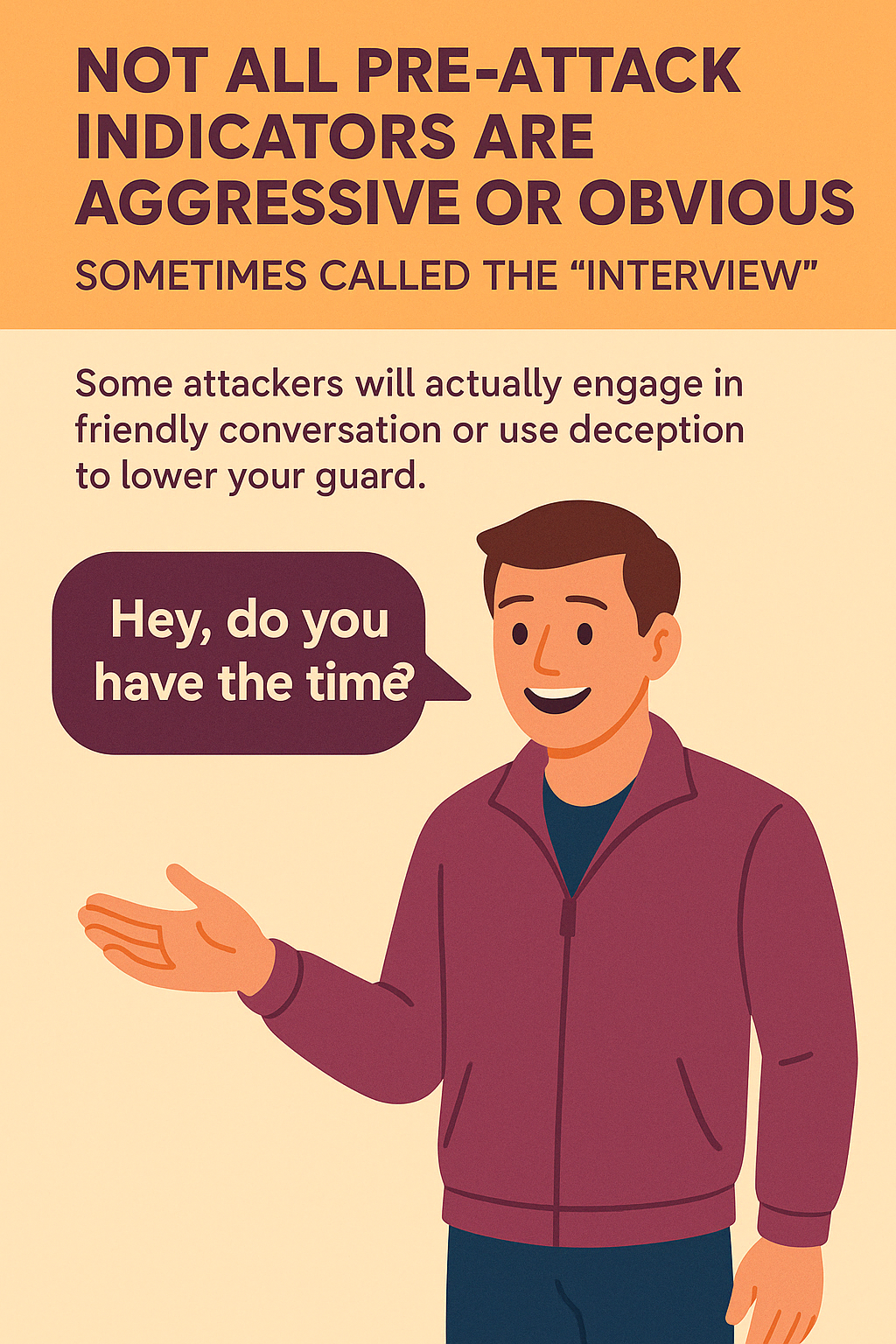
If your gut tells you an innocent chat isn’t so innocent, you’re probably right. Predators often select victims who appear easily distracted or submissive [5]. By staying alert and assertive during any stranger encounter, you send a signal that you’re not an easy target. In many cases, an assailant will abort the plan if the “interview” doesn’t go as they hoped.
One self-defense author notes that by confidently recognizing and countering a suspicious approach, you can disrupt the predator’s plan and essentially “turn the tables” on the would-be attacker [5]. So, if a stranger’s behavior strikes you as a possible setup, trust that feeling. You might choose to politely decline conversation and keep walking, or even use a loud verbal command (“Stay back!”) if the situation escalates. A loud, unexpected response can startle the attacker and even draw others’ attention, interrupting the attack cycle. The bottom line: don’t be afraid to break social niceties if you think someone is probing you for an attack. Your safety comes first.
Preparing Mentally and Tactically to Respond
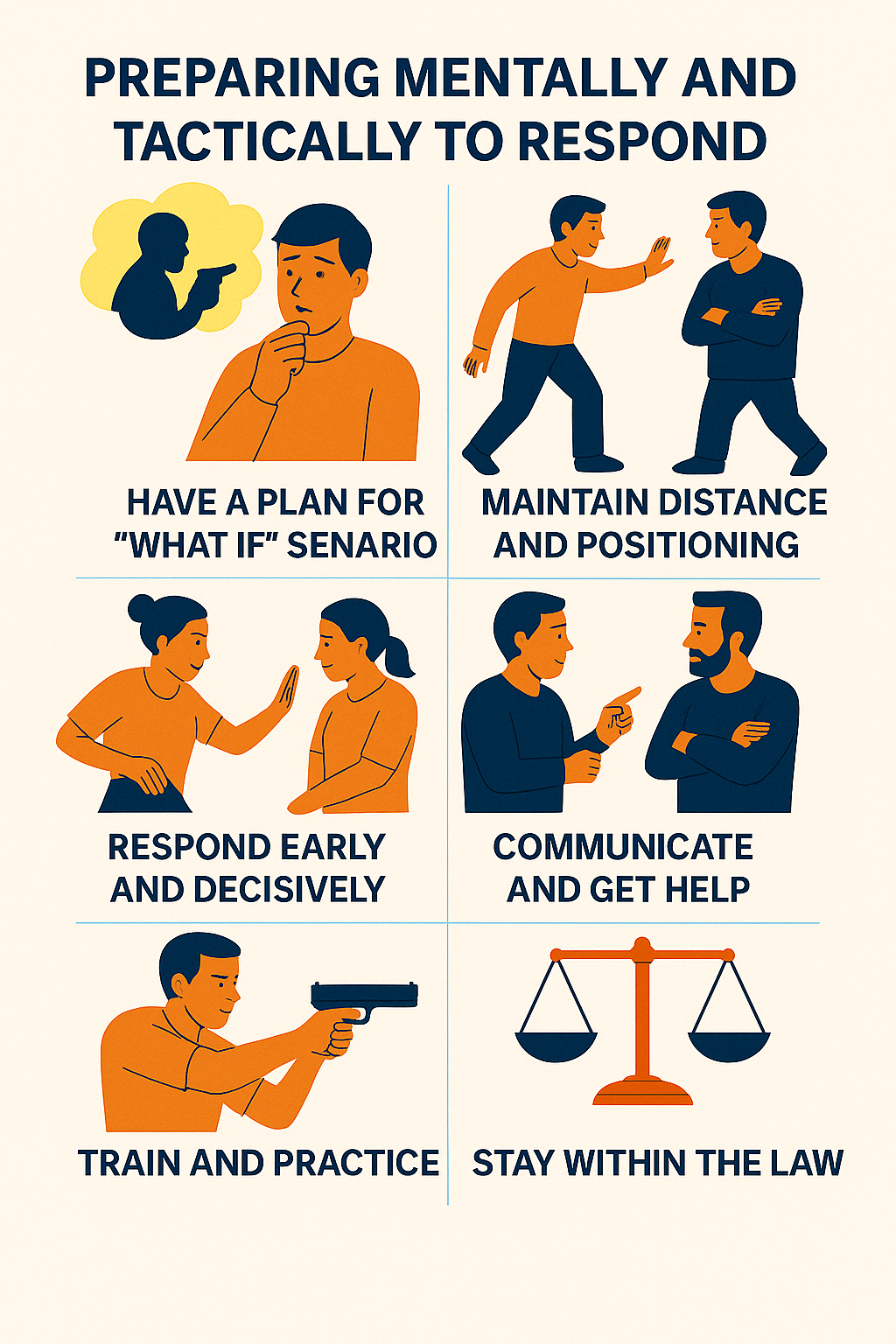
Recognizing pre-attack indicators is only half the battle – you also need to know how to respond once you spot them. This means cultivating a defensive mindset and having a game plan long before anything ever happens. Here are some tips to prepare yourself mentally and tactically:
1. Have a Plan for “What If” Scenarios: Mentally rehearse how you’d handle common threat situations so that if they occur, you’re not caught entirely flat-footed. For example, ask yourself: What would I do right now if that guy approaching me shows a weapon? Where is my cover or escape route? Look around and identify your exits and potential cover (like concrete pillars, cars, walls) whenever you enter a new environment [3]. If you’re alert to where you could retreat or take cover, you won’t have to figure it out under duress – you’ll know instantly where to go.
Likewise, think through how you’d draw your firearm in a crowded area versus an open area, or what you’d do if attacked at arm’s length versus from across a parking lot. This kind of visualization primes your mind to act faster in the moment. As the saying goes, “Don’t plan during the emergency, plan before.”
By being vigilant about pre-attack indicators, you can contribute to community safety.
Recognizing pre-attack indicators can ultimately lead to a safer environment for everyone.
2. Maintain Distance and Positioning: Distance is your friend in a potential conflict. If you observe someone exhibiting red flags, try to keep a buffer zone. Step back or angle yourself so you have more reaction time if they charge. This also gives you a moment to draw a defensive tool if needed. Criminals often try to close distance to intimidate or to make a sudden attack easier – don’t let them. If you’re armed, remember the principle of the reactionary gap: you typically need about 1.5 to 2 seconds to react to an attack, which translates to roughly 21 feet of distance against an attacker with a knife (the well-known Tueller rule). While you might not always have that much space, any extra distance improves your odds. If a suspicious person keeps advancing, you are allowed to command, “Stop, don’t come any closer!” If they ignore that boundary, it’s a strong indicator of ill intent.
Also, try not to let an unknown individual position themselves behind you or pin you in. If you suspect you’re being followed, consider changing direction or crossing the street – does the person mirror you? If yes, that’s confirmation something is wrong, and you should move to the next step of your plan (whether that’s seeking help, drawing your weapon, or escaping).
Utilizing knowledge of pre-attack indicators can encourage proactive safety measures.
Following your training and awareness of pre-attack indicators will enhance your ability to respond.
3. Respond Early and Decisively: The moment you recognize a cluster of pre-attack indicators or get that “creepy” gut feeling with supporting evidence, be ready to respond without hesitation [1]. This doesn’t always mean drawing your gun at the first sign of trouble – in fact, avoidance and escape are often the best responses if they’re available. Remember, avoidance is the number one self-defense tactic whenever possible [4]. If you can safely break contact and get out of the situation, do it.
This might mean quickly ducking into a store, like Greg Ellifritz’s quick-thinking girlfriend did to avoid a looming mugging [1], or hopping in your car and locking the doors if someone is approaching you in a parking lot. If escape isn’t feasible and a confrontation is imminent, you may choose to verbally confront the person (“Back off! I’m calling the police!”) in a loud, commanding voice – often, attackers fear attention, and this might scare them away or at least make them think twice [3]. Simultaneously, prepare to defend yourself physically in case they charge at you. This could mean putting your hand on your concealed firearm (while still holstered) to cut your draw time, or readying your pepper spray in hand, etc.
Every situation is different, but the key is to do something proactive when you sense an attack coming. Freezing or denying what’s happening can be fatal. As one expert puts it, when you get that early warning, act without hesitation – whether that means fleeing, drawing a weapon, or using some other planned tactic [1].
4. Communicate and Get Help: If you’re not alone, communicate with your partner or friend about the threat – even a quick “Those guys to our left are following us” lets your companion know to be ready. Two sets of eyes are better than one, and you can coordinate a response (for instance, one of you calls 911 while the other watches the threat). If you’re in a public area, you can also use the environment to your advantage by drawing attention. Yelling loudly (“Get away from me! Call 911!”) not only might spook the attacker, but could also alert bystanders to assist or at least witness the scene.
Criminals prefer easy, isolated targets. If you make yourself a hard target – visible and vocal – you shift the odds. Of course, use discretion; you wouldn’t want to escalate a minor uncertainty into a full-blown confrontation unnecessarily. But if you know an attack is about to happen or already starting, don’t stay silent. Alert others and seek help if possible [3].
5. Train and Practice: In a high-stress moment, your body will default to its level of training. Adrenaline can cause tunnel vision, shaking hands, and confusion – unless you’ve ingrained some responses through practice. This is why consistent training in self-defense and firearm skills is so important. Take scenario-based classes if you can, or practice with a partner. Work on drawing from concealment, moving to cover, issuing verbal commands, and shooting in various positions (if lethal force becomes necessary). The more you practice, the more those actions become second nature, even under stress [3].
Training also builds confidence, which translates to a more assertive presence that can deter attackers before things go kinetic. Even simple at-home mental rehearsals (“If someone burst through that door right now, what’s my move?”) can help you feel more prepared. Being mentally and physically prepared will reduce reaction time and help you keep a cool head if the worst happens [3][6].
6. Stay Within the Law: As a concealed carrier, you must also prepare tactically in terms of legal knowledge. Understand your state’s laws on self-defense and deadly force. Know what constitutes a justifiable threat. Pre-attack indicators can strongly suggest danger, but remember that your actions must be reasonable given the situation. For instance, drawing your firearm is typically justified only when you reasonably believe you’re in imminent danger of death or grave bodily harm. Multiple pre-attack cues can certainly add up to that belief, but be sure you can articulate why you felt your life was in danger if you ever have to. This legal awareness is part of your tactical preparation too – it guides you to respond appropriately and not overreact.
When in doubt, de-escalation or withdrawal is preferable to using force until you’re sure it’s necessary [3]. Your goal is to survive and protect innocent life, not to win a fight or teach someone a lesson. Keeping an avoidance mindset (ego firmly aside) will help you make sound decisions under pressure.
Conclusion
Developing the ability to recognize pre-attack indicators can dramatically improve your personal safety as a concealed carrier. By staying alert to your environment and attuned to behavioral red flags, you’ll notice trouble coming before it’s too late to act. Remember that these warning signs are often subtle and must be viewed in context – one odd behavior might mean nothing, but several together should trigger your internal alarms. Trust those alarms! Your intuition, backed by the knowledge of what cues to look for, is a powerful early-warning system [1]. When it goes off, respond decisively: either by avoiding the threat or preparing to defend against it.
Taking note of pre-attack indicators can be the difference between safety and danger.
Whether you’re walking downtown or down a country road, the fundamentals remain the same. Keep your head up, watch the hands, read the body language, and note the vibe of your surroundings. Criminals often telegraph their intent without even realizing it – and now you know what to watch for.
By practicing good situational awareness and mental preparedness, you can stay one step ahead of danger. In the best case, you’ll deter or evade the attack entirely; at the very least, you’ll not be caught by surprise. For those of us who carry concealed, this skill set is as important as marksmanship. After all, the safest fight is the one avoided.
Stay alert, stay safe, and carry on.
References
- Greg Ellifritz. (2020, August 4). How to Spot a Bad Guy – A Comprehensive Look at Body Language and Pre-Assault Indicators. Buckeye Firearms Association
- Calibre Press (Dan Marcou, Jim Glennon & Chuck Remsberg). (2019, August 12). Officer safety: Identifying non-verbal, pre-attack indicators. Police1/Calibre Press
- William DeMuth. (2024, Jan 17; updated Oct 22, 2024). How a Military Concept Called “Left of Bang” Can Apply To Violence Prevention and Self Defense. Intelligent Self-Protection (CVPSD)
- Steve Tarani. (2021, April 22). Clear Indicators: 7 Signs You’re Going to be Attacked. USCCA Blog
- Richard Johnson. (2022, August 11). Deadly Decisions: Do You Make These Mistakes? The Armory Life
- Eugene Nielsen. (2023, November 6). What Is Situational Awareness? USCCA Blog




![[HOLSTER REVIEW] Crossbreed SuperTuck Deluxe Holster](https://imagedelivery.net/sbm_lYeJbALkepJgtmRD5w/concealednation.org/2014/11/thumbnail-template-crossbreed-supertuck-deluxe-holster-review.jpg/w=728,h=381)
I constantly spent my half an hour to read this website’s articles or reviews
daily along with a cup of coffee.
Feel free to surf to my webpage: mersin’de ofis Eskortlari
Very nice post. I definitely appreciate this website. Thanks!
Hello! I simply wish to give you a huge thumbs up for the great information you’ve got right here on this post. I’ll be coming back to your web site for more soon.
obviously like your website but you need to test the spelling on several of your posts. Many of them are rife with spelling issues and I find it very troublesome to inform the truth nevertheless I’ll definitely come again again.
There is definately a lot to find out about this issue. I love all of the points you made.
Peculiar article, exactly what I was looking for.
I am not sure where you’re getting your information, but good topic. I needs to spend some time learning much more or understanding more. Thanks for wonderful information I was looking for this information for my mission.
Wow, this post is fastidious, my sister is analyzing these things, so I am going to inform her.
whoah this blog is excellent i really like reading your articles. Stay up the good work! You already know, many people are hunting round for this information, you can help them greatly.
Hello my loved one! I want to say that this post is amazing, great written and come with approximately all important infos. I’d like to peer extra posts like this .
Wow that was unusual. I just wrote an really long comment but after I clicked submit my comment didn’t show up. Grrrr… well I’m not writing all that over again. Anyways, just wanted to say excellent blog!
Howdy, I do think your web site might be having internet browser compatibility issues. Whenever I take a look at your site in Safari, it looks fine but when opening in IE, it’s got some overlapping issues. I just wanted to give you a quick heads up! Other than that, wonderful blog!
I do not even know how I finished up here, but I believed this submit was good. I don’t understand who you might be however definitely you’re going to a famous blogger if you are not already. Cheers!
Heya i am for the primary time here. I came across this board and I find It really useful & it helped me out a lot. I’m hoping to provide one thing again and aid others like you aided me.
It is not my first time to visit this website, i am browsing this web page dailly and obtain good data from here every day.
Ahaa, its pleasant discussion on the topic of this piece of writing here at this web site, I have read all that, so now me also commenting here.
What a information of un-ambiguity and preserveness of precious know-how concerning unpredicted emotions.
Very nice post. I just stumbled upon your blog and wanted to say that I have truly enjoyed surfing around your blog posts. In any case I’ll be subscribing in your rss feed and I am hoping you write once more soon!
An interesting discussion is worth comment. I do think that you should write more about this subject, it might not be a taboo subject but typically folks don’t talk about such subjects. To the next! Best wishes!!
What’s up friends, its great piece of writing regarding tutoringand entirely defined, keep it up all the time.
Fastidious answers in return of this issue with real arguments and explaining the whole thing regarding that.
Way cool! Some extremely valid points! I appreciate you writing this write-up plus the rest of the website is also really good.
I got this web site from my buddy who informed me on the topic of this web page and now this time I am visiting this web page and reading very informative content here.
My brother recommended I might like this web site. He was entirely right. This post truly made my day. You cann’t imagine simply how much time I had spent for this info! Thanks!
Heya are using WordPress for your blog platform? I’m new to the blog world but I’m trying to get started and create my own. Do you need any coding knowledge to make your own blog? Any help would be greatly appreciated!
I leave a response whenever I like a post on a website or if I have something to contribute to the conversation. It is a result of the sincerness communicated in the post I looked at. And after this post Mezitli Cimcif Escort. I was actually moved enough to drop a comment 😉 I actually do have 2 questions for you if you don’t mind. Is it simply me or does it give the impression like some of these remarks come across as if they are coming from brain dead folks? 😛 And, if you are writing on other online sites, I’d like to follow anything new you have to post. Would you list all of all your social pages like your Facebook page, twitter feed, or linkedin profile?
This is a really good tip particularly to those fresh to the blogosphere. Brief but very accurate info… Appreciate your sharing this one. A must read article!
Hello mates, its enormous article regarding cultureand completely defined, keep it up all the time.
I constantly spent my half an hour to read this webpage’s content every day along with a mug of coffee.
It’s amazing for me to have a web site, which is helpful in support of my knowledge. thanks admin
I am sure this piece of writing has touched all the internet viewers, its really really fastidious post on building up new blog.
Hello to all, how is the whole thing, I think every one is getting more from this website, and your views are fastidious in favor of new people.
It’s nearly impossible to find experienced people about this topic, but you seem like you know what you’re talking about! Thanks
I just like the valuable information you supply to your articles. I will bookmark your weblog and take a look at again right here frequently. I’m slightly sure I’ll be informed many new stuff proper right here! Good luck for the next!
I am genuinely pleased to read this website posts which carries tons of useful information, thanks for providing these kinds of data.
It’s an remarkable piece of writing in favor of all the web users; they will obtain benefit from it I am sure.
Why viewers still make use of to read news papers when in this technological world all is existing on web?
Hi friends, fastidious article and fastidious arguments commented here, I am actually enjoying by these.
I was suggested this web site by my cousin. I’m not sure whether this post is written by him as no one else know such detailed about my problem. You are amazing! Thanks!
Hey! Do you use Twitter? I’d like to follow you if that would be ok. I’m absolutely enjoying your blog and look forward to new posts.
When someone writes an article he/she retains the thought of a user in his/her mind that how a user can be aware of it. Thus that’s why this piece of writing is perfect. Thanks!
I know this if off topic but I’m looking into starting my own weblog and was wondering what all is needed to get set up? I’m assuming having a blog like yours would cost a pretty penny? I’m not very internet smart so I’m not 100% sure. Any tips or advice would be greatly appreciated. Kudos
It’s remarkable designed for me to have a web page, which is good in favor of my knowledge. thanks admin
always i used to read smaller articles that also clear their motive, and that is also happening with this article which I am reading now.
When I initially commented I clicked the “Notify me when new comments are added” checkbox and now each time a comment is added I get four e-mails with the same comment. Is there any way you can remove people from that service? Cheers!
I know this website gives quality depending articles or reviews and additional information, is there any other site which presents these information in quality?
Appreciate the recommendation. Let me try it out.
In fact when someone doesn’t know afterward its up to other people that they will help, so here it happens.
Cool blog! Is your theme custom made or did you download it from somewhere? A theme like yours with a few simple tweeks would really make my blog stand out. Please let me know where you got your theme. Bless you
I am in fact grateful to the holder of this website who has shared this great post at here.