





Affiliate disclosure: As an Amazon Associate, Concealed Nation may earn from qualifying purchases. Product links lead to Amazon; ratings, availability, prices, and model matches must be verified against current listings before publication. Product images below are illustrations, not official product photographs.
Military installations, European governments, and households are all discussing infrastructure resilience. Here is what the confirmed news says, and how to create your own emergency plan.
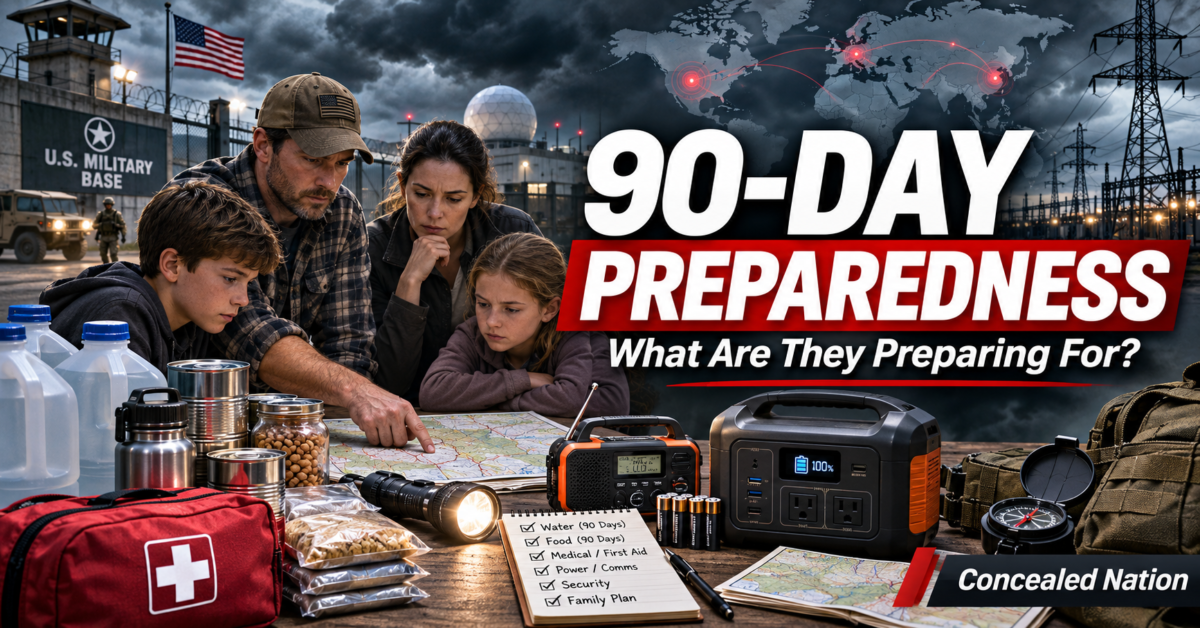
Something unusual is happening in the language of national preparedness. The U.S. military is building a program around independence from vulnerable infrastructure. Governments in Europe are asking households to have water, food, medication, radio access, and other essentials ready. The question many Americans are asking is simple: What are they preparing for?
What the Pentagon actually announced
On September 30, 2026, the Pentagon unveiled FORTRESS America, a program emphasizing independent military power, resilient supply chains, strategic reserves, harder installations, and cyber protection. Subsequent reporting based on internal planning material described a proposed target for major bases to sustain essential operations for at least 90 days without outside civilian support. Importantly, the publicly released initiative does not establish that all bases have been formally ordered to meet that standard by a fixed deadline. It is a planning goal reported from internal material, not evidence of a specific upcoming conflict.
Overseas, governments are talking to households
The United Kingdom launched its Be Ready campaign on October 22, 2026, recommending three days of food and water along with flashlights, medication, a radio, cash, and emergency contacts. The European Commission has outlined a minimum 72-hour household resilience goal. Sweden and Norway recommend roughly one week of home preparedness, while Germany recommends a 10-day food-and-water reserve. These campaigns evolved over different timelines; there is no verified evidence that they were triggered by the same undisclosed imminent event.
Why families should care
Modern emergencies cascade. Grid failure can affect water treatment, fuel pumps, cellular towers, refrigeration, hospital systems, and electronic payments. The disruption may come from a hurricane, an ice storm, a cyberattack, industrial failure, sabotage, or war. A family cannot control the event, but it can control what supplies are already on hand. The sensible response is not panic buying. It is an organized, layered plan with tested equipment and realistic goals.
Water Storage & Filtration
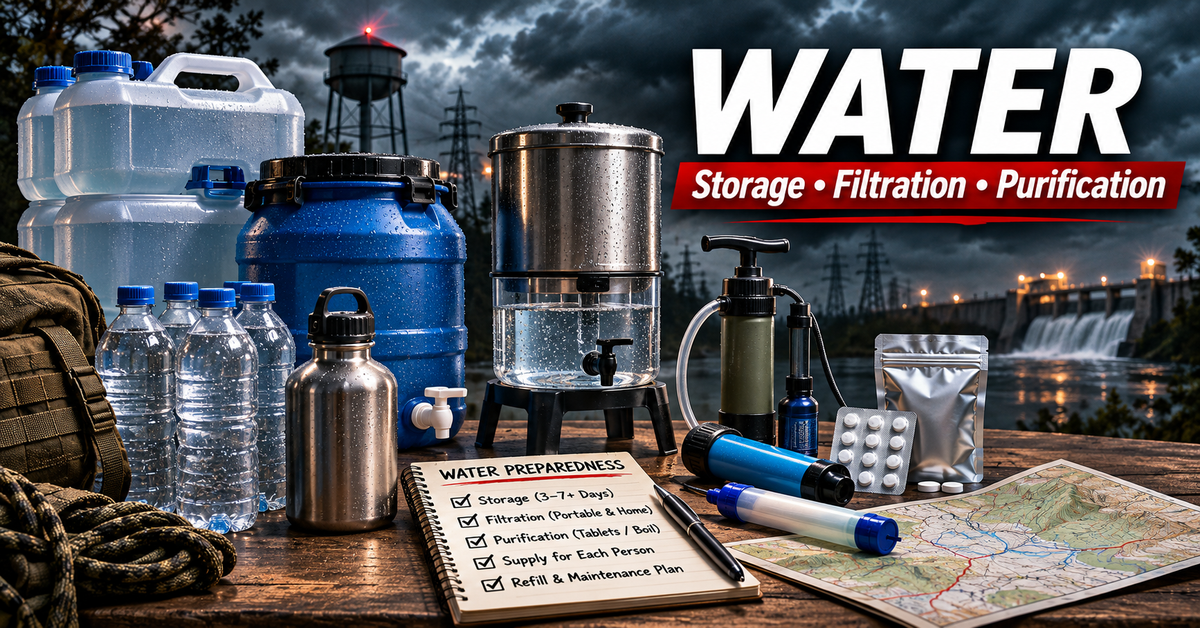
The first priority is clean water. The CDC recommends at least one gallon per person per day, with a three-day minimum and a two-week supply if possible. Four people need 28 gallons for a week and 120 gallons for a 30-day reserve. Buy storage first; filtration and treatment supplement it rather than magically making every contaminated source safe.
Water safety: Most backpacking filters do not remove viruses, dissolved chemicals, or radioactive contamination. Do not assume muddy or industrially contaminated water is safe after basic filtration.
Scepter 5-Gallon Military-Style Water Container
Rugged, stackable-style portable water storage for distributing supplies around the home.
Reliance Aqua-Tainer 7-Gallon Container
High-capacity household water storage with a dispensing spigot.
waterBOB 100-Gallon Bathtub Storage
Last-minute water storage when advance warning allows you to fill a bathtub.
LifeStraw Personal Water Filter
Small backup filter for individual use with appropriate freshwater sources.
Sawyer Squeeze Water Filtration System
Reusable backpacking-style filter that can serve as a portable backup.
Katadyn BeFree Water Filter
Collapsible-bottle filter ideal for evacuation bags and day packs.
Aquamira Water Treatment Drops
Chemical disinfection option; follow exact contact times and water-quality limits.
Food & Cooking
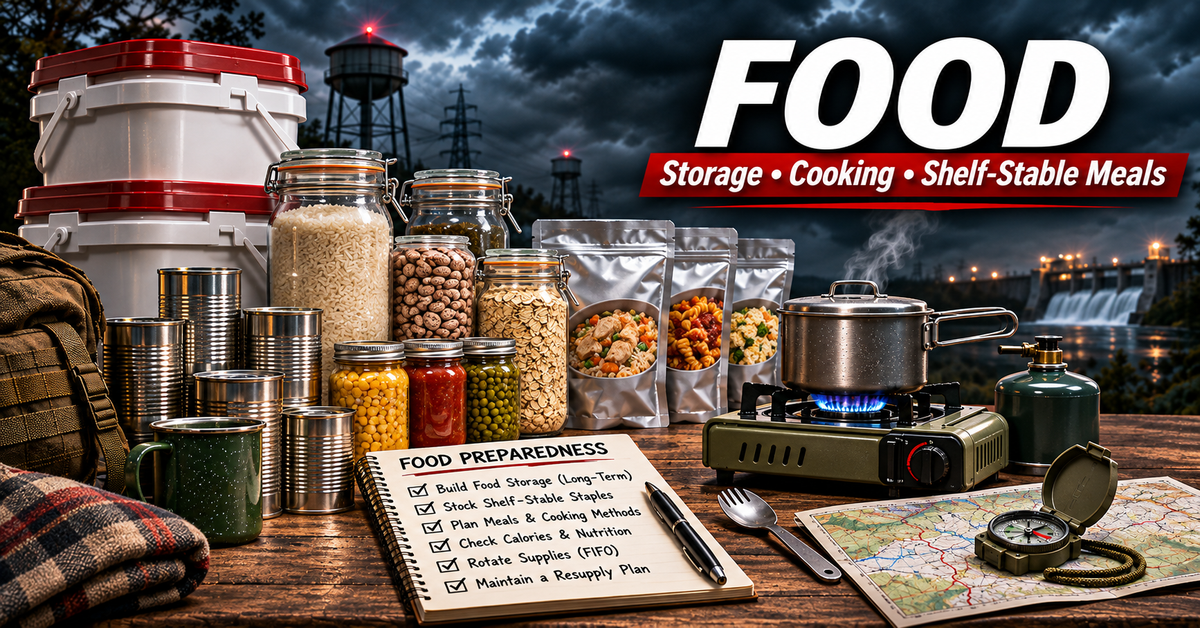
Food storage should start with what a family actually eats. Build a rotating pantry of canned protein, beans, fruit, vegetables, grains, and shelf-stable meals. Freeze-dried buckets are useful backups, but check total calories and required water. A product marketed as “120 servings” is not necessarily 120 full meals.

Augason Farms Lunch & Dinner Emergency Food Pail
Assorted shelf-stable meal components; check calories and available water.

Mountain House Classic Bucket
Convenient freeze-dried meals packaged for long-term storage.
ReadyWise Emergency Food Supply Bucket
A varied dry-meal reserve; calculate calories rather than servings.
S.O.S. 3600-Calorie Emergency Ration Bars
Compact ready-to-eat backup calories for a vehicle or evacuation bag.

Augason Farms Long-Grain White Rice Pail
Bulk staple calories that pair with a rotating pantry.

Coleman Classic Two-Burner Propane Stove
Outdoor cooking during utility outages; never use indoors.

OXO Good Grips Manual Can Opener
A simple but essential tool when the electricity goes out.
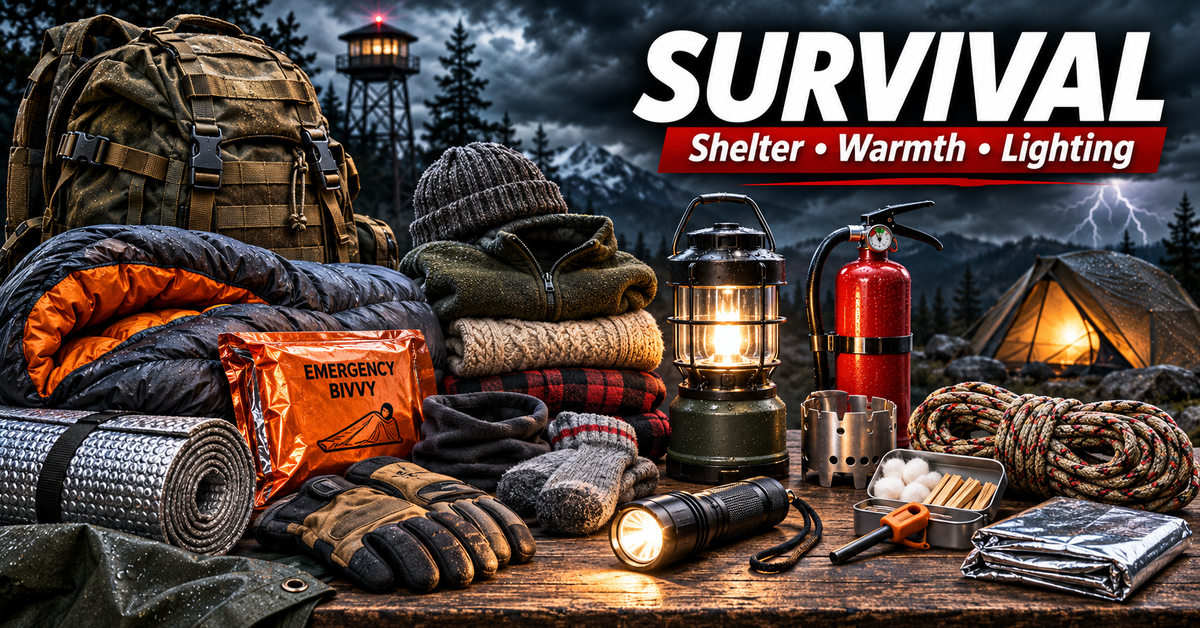
Shelter, Warmth & Survival
A prolonged power outage becomes a serious threat when temperatures swing. Prioritize shelter, layered clothing, blankets, lighting, and fire safety before specialty survival gadgets. Never use outdoor combustion equipment to heat a sealed indoor space.
Swiss Safe Emergency Mylar Blankets
Low-cost reflective blankets for each member of the household.

TETON Sports Celsius Sleeping Bag
An affordable sleeping setup for cold rooms or temporary shelter.



UCO Stormproof Match Kit
Weather-resistant ignition for approved outdoor fires and stoves.

Kidde Multipurpose ABC Fire Extinguisher
Basic home fire protection worth maintaining and knowing how to use.
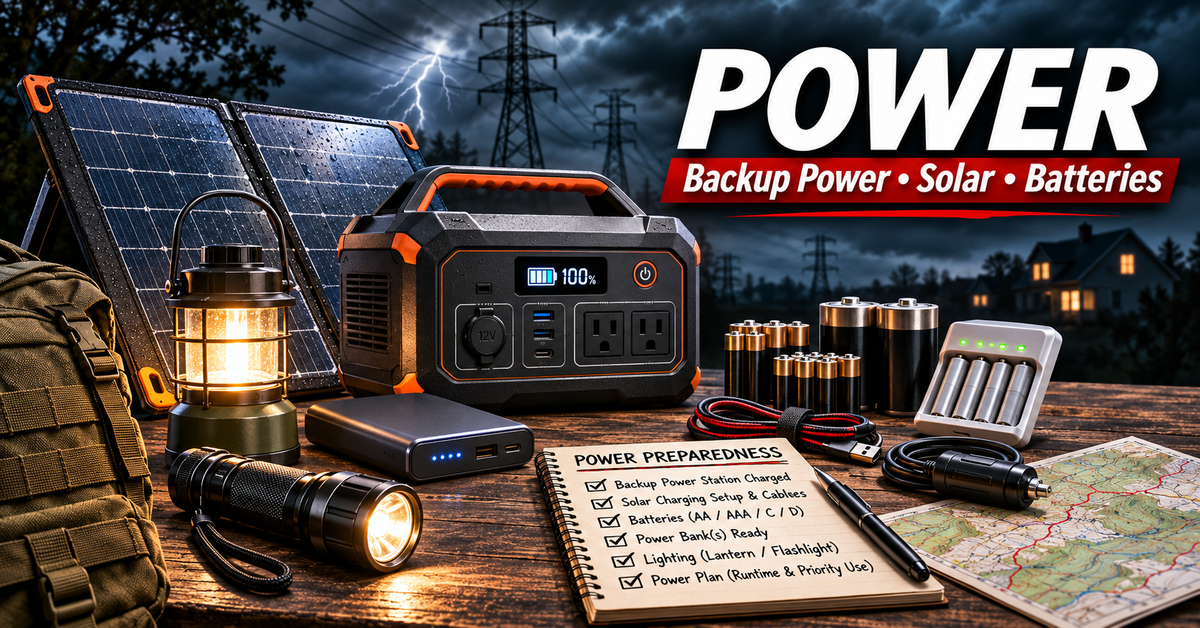
Backup Power & Solar
Start with a load inventory: phones, router, lights, refrigerator, and any medically necessary equipment. Battery capacity (watt-hours), output limits (watts), and charging inputs matter more than marketing claims. Solar extends resilience but requires adequate sun and compatible connectors.
Power safety: Fuel generators and propane stoves stay outdoors, away from doors, windows and vents. Match solar panels to your power station’s input and approved cables.

Anker SOLIX C1000 Gen 2 Power Station
Mid-size portable battery for selected home essentials.

Jackery Explorer 1000 v2 Power Station
Portable LiFePO4 power station with multiple outlet types.
BLUETTI AC180 Power Station
Higher-output backup option for several small essential loads.
EcoFlow DELTA 3 Power Station
Fast-charging household backup option with solar input.
DJI Power 1000 V2
Large portable battery option; confirm solar connector compatibility.
Anker 20,000mAh USB-C Power Bank
Low-cost essential charging for phones and small electronics.
ZOUPW 200W Folding Solar Panel
Portable solar charging; verify voltage, polarity, adapter, and power station limits.
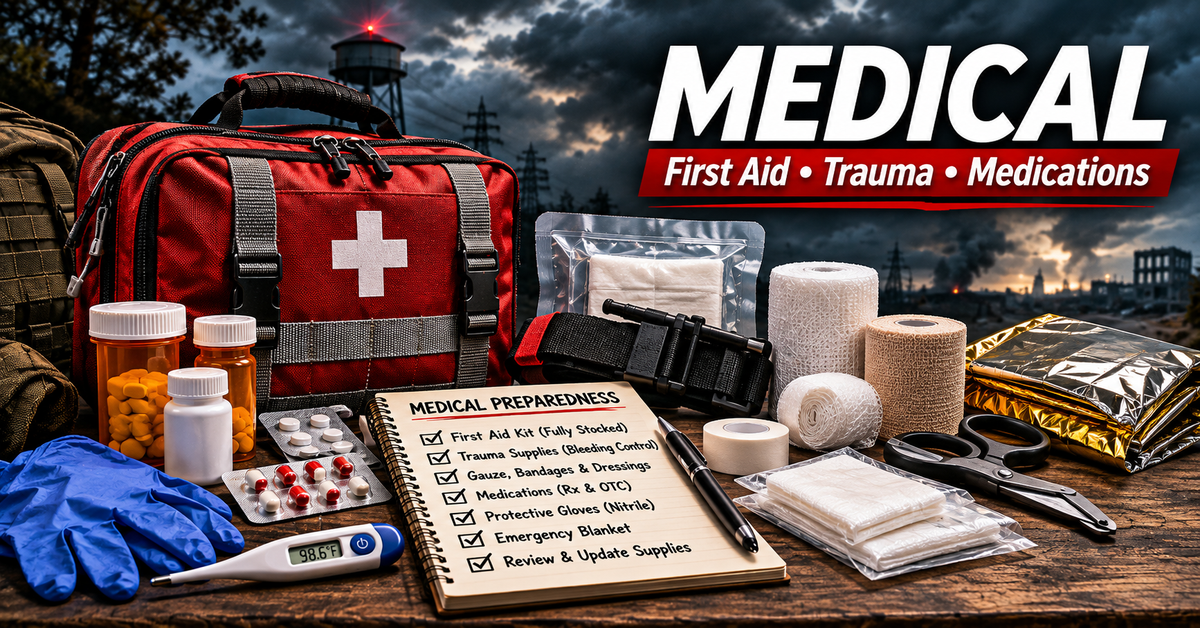
First Aid & Medical
During widespread disruption, pharmacies and emergency responders may be delayed. Keep personal prescriptions, written medication lists, basic wound supplies, and any special-needs equipment. Consider CPR and bleeding-control training; a kit is only as useful as the knowledge behind it.

First Aid Only 299-Piece First Aid Kit
General household first-aid supplies organized in one case.
Adventure Medical Kits Mountain Series Explorer
Outdoor-oriented kit useful for vehicles and evacuation bags.

QuikClot Bleeding Control Gauze
Additional wound-care resource for people trained in bleeding control.

SAM Splint 36-Inch Roll
Moldable splint material for immobilization when appropriately trained.

Braun ThermoScan 7 Ear Thermometer
Reliable temperature monitoring for home illness management.
CPR Pocket Resuscitation Mask
Barrier protection for trained rescuers performing CPR.

Medline Sterile Gauze Pads & Rolls
Replenishment supplies for routine dressings and wound coverage.
Radios & Communications
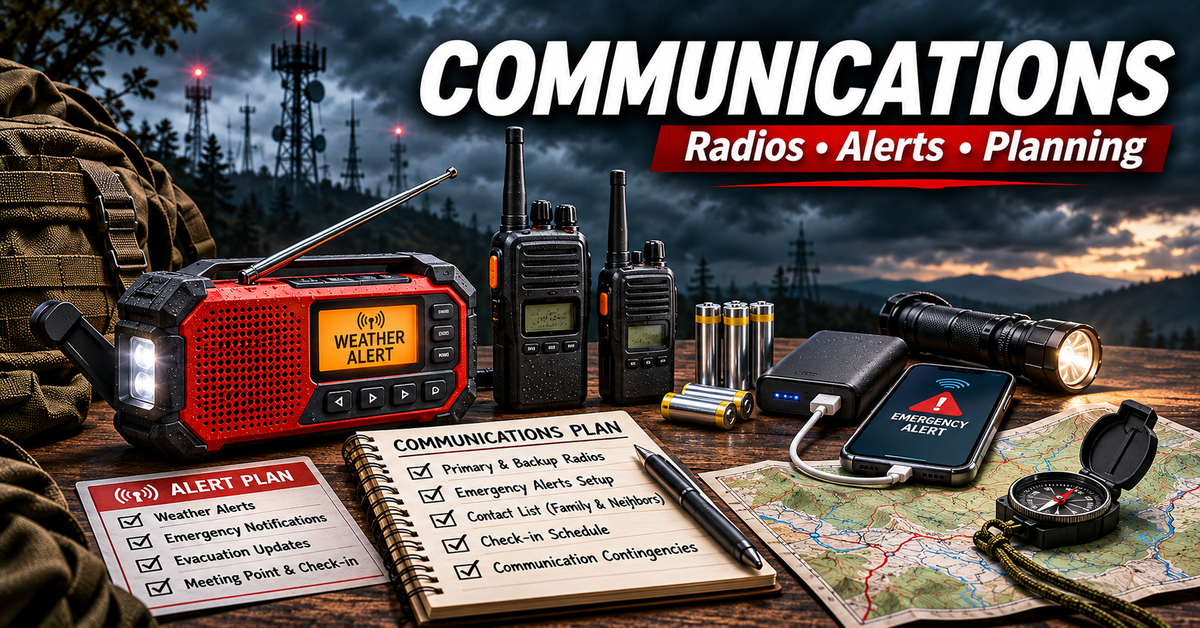
If mobile towers lose backhaul or power, your phone may not connect. Maintain a radio that works without wall power, written contact numbers, and a family communications plan. Satellite communicators generally require subscriptions and an outdoor view of the sky.
Midland ER310 Emergency Weather Radio
Weather alerts plus alternate charging and emergency lighting.
Eton FRX3+ Emergency Radio
Compact emergency-radio alternative with charging options.
Midland WR120 NOAA Weather Alert Radio
Dedicated home alerts while ordinary electricity is available.

Motorola Talkabout T475 Two-Way Radios
Short-range FRS communication for local family coordination.

Midland X-TALKER T71VP3 Radios
Additional family FRS radio pair with rechargeable batteries.

Garmin inReach Mini 2 Satellite Communicator
Off-grid emergency messaging with a paid service plan.
Sanitation & Hygiene
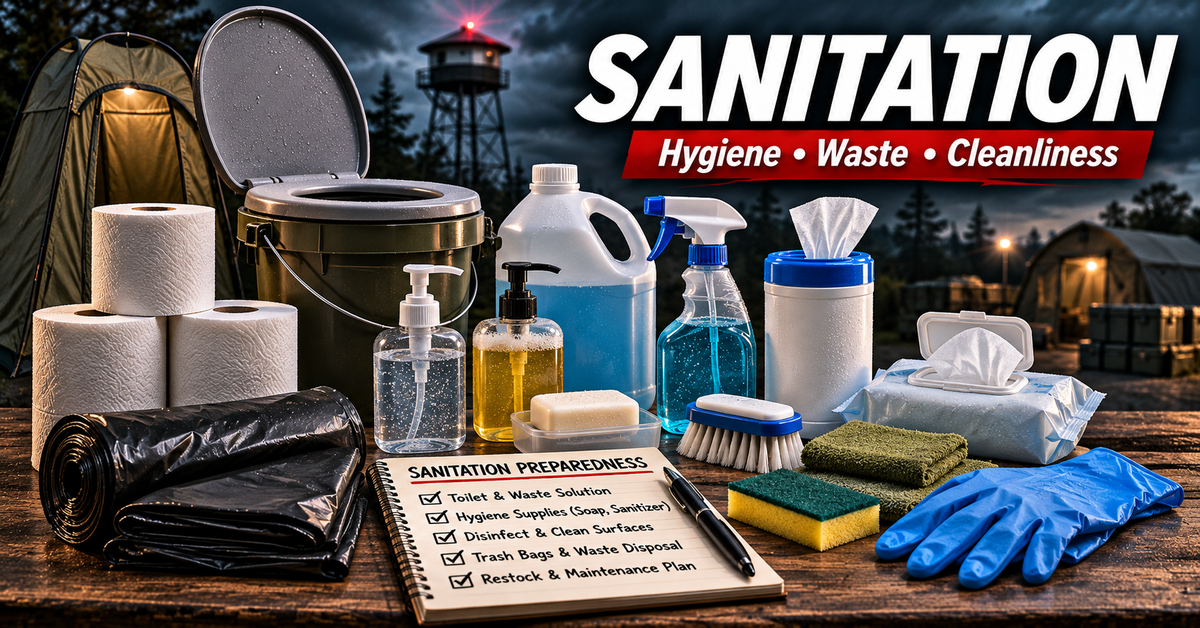
A loss of running water is also a sanitation emergency. Store hand-cleaning supplies, refuse bags, wipes, toilet paper, infant products, and a bathroom backup. Manage waste safely and follow local public-health instructions during sewage interruptions.

Reliance Luggable Loo Portable Toilet
Simple bucket-style toilet for disruption of household plumbing.
Camco 5.3-Gallon Portable Toilet
Self-contained holding-tank alternative for longer outages.
Cleanwaste GO Anywhere Toilet Kit
Portable shelter-compatible toilet option for evacuation.
Cleanwaste WAG Bags
Human-waste containment supplies for compatible portable toilets.
PURELL Advanced Hand Sanitizer
Hand hygiene supplement when soap and water are not available.

Dr. Bronner’s Unscented Pure-Castile Soap
Versatile unscented cleaning supply for appropriate uses.
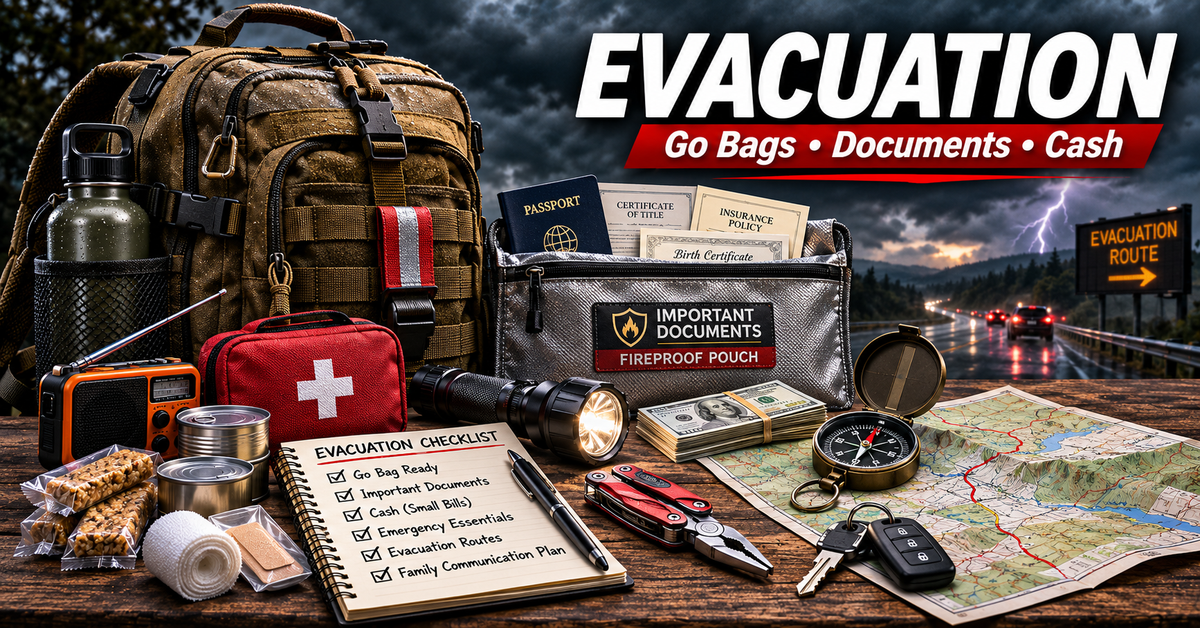
Evacuation, Cash & Documents
Not every crisis calls for sheltering in place. Have a departure plan, a designated family meeting place, paper maps, small-denomination cash, and copies of insurance, medical, and identification documents. Secure sensitive information against theft.
SentrySafe Fire/Water-Resistant Document Chest
One location for important household documents; check rated protection limits.

Plano Sportsman Storage Trunk
Stackable tote for organizing family emergency supplies.


Rite in the Rain All-Weather Notebook
Write contacts and procedures that remain readable when wet.

Nite Ize RunOff Waterproof Pouch
Protect important copies and small electronics from moisture.
SanDisk Extreme Portable SSD
Portable encrypted digital document backup, stored securely.
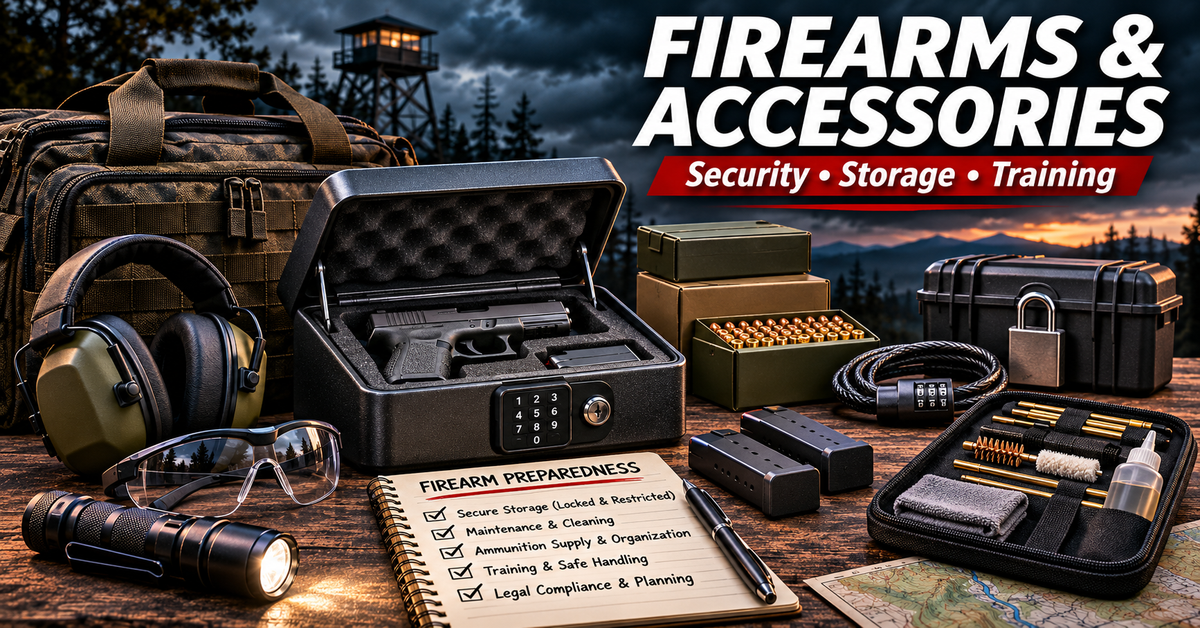
Firearm Safety & Accessories
For lawful gun owners, preparedness includes safe storage, familiarization, hearing protection, secure transport, and avoidance of confrontation. Locked storage is especially important around children. These selections intentionally focus on protective and storage equipment rather than weapons or ammunition.
VAULTEK LifePod 2.0 Lockable Case
Portable lockable storage for valuables or compatible firearms.


SentrySafe QAP1BE Quick-Access Safe
Fixed-location lockable storage with powered access.
SnapSafe Treklite Lock Box
Lightweight lockable case for transport and household storage.

Walker’s Razor Slim Electronic Earmuffs
Popular electronic hearing protection for range practice.

Howard Leight Impact Sport Earmuffs
Another established option for shooting-range hearing protection.

Lockdown GoldenRod Dehumidifier
Humidity control in suitable gun cabinets or storage spaces.
Put the categories together: A practical 90-day preparedness roadmap
Days 1–3: Buy drinking water, three days of familiar shelf-stable food, flashlights, batteries, a first-aid kit, hygiene supplies, and a written family contact plan.
Days 4–7: Increase water and food stocks, add a radio, a safe outdoor cooking method, medications, and blankets.
Weeks 2–4: Build a rotating pantry, stock more water or establish a safe replenishment plan, test backup power, and assemble evacuation bags.
Longer-term: Identify a safe source of replacement water, document power needs, maintain sustainable sanitation, and arrange mutual assistance with family or neighbors. A 90-day plan is a direction of travel, not an excuse to purchase everything at once.
What are they preparing for?
There is no sound basis for claiming these announcements prove a specific disaster is coming. What they do demonstrate is that officials see infrastructure resilience as a serious security issue. The same vulnerabilities that matter to a military installation can also matter to a household. You do not need a bunker, or a theory about a secret timetable, to justify keeping more water, food, medical supplies, lights, communications, and a reliable emergency plan. The question is not whether you can predict the next major disruption. It is whether your family could manage when ordinary services are interrupted.
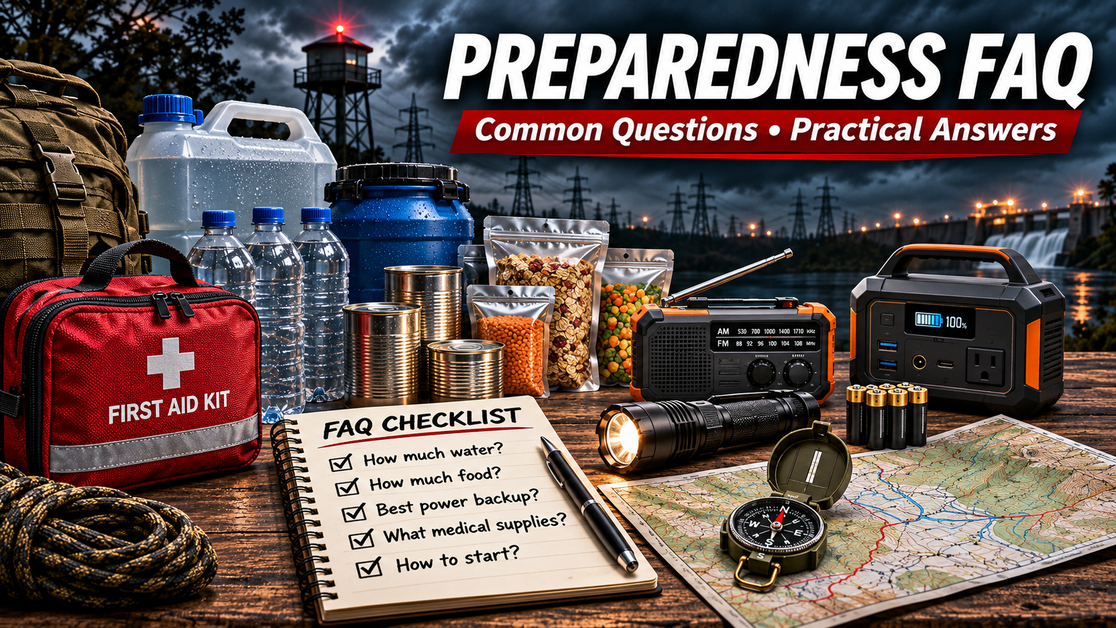
Frequently Asked Questions About 90-Day Emergency Preparedness
1. Why is the U.S. military preparing for 90 days without outside support?
The Pentagon’s FORTRESS America initiative is designed to strengthen military installations against disruptions involving electricity, water, fuel, communications, and supply chains. According to October 2026 reporting, a key objective is enabling major military bases to maintain essential operations independently for at least 90 days. The goal is to ensure that military facilities remain operational during major emergencies, cyberattacks, or infrastructure failures.
2. Does the government’s 90-day preparedness plan mean war is coming?
No. There is currently no publicly established evidence that the FORTRESS America initiative signals an imminent war or a specific planned emergency. Military contingency planning is a normal part of national defense. However, the initiative highlights growing concerns about infrastructure vulnerabilities, cyberattacks, geopolitical instability, and other threats that could disrupt essential services.
3. Why are governments around the world telling citizens to prepare?
Several European governments, including those in the United Kingdom, Sweden, Norway, and Germany, have issued or updated emergency preparedness recommendations. These initiatives address risks such as severe weather, cyberattacks, power outages, infrastructure failures, and military conflict. The European Union also recommends that households maintain at least 72 hours of emergency supplies. The recommendations do not establish that governments are anticipating a single specific catastrophe.
4. Should every American family have 90 days of emergency supplies?
A 90-day supply can provide additional security during a prolonged emergency, but it isn’t an official requirement for American households. FEMA recommends beginning with at least three days of essential supplies. Families can gradually expand their preparedness to seven days, 30 days, or longer depending on their circumstances, available storage, and budget.
5. How much emergency water should a family store?
A common federal emergency preparedness recommendation is at least one gallon of water per person per day for drinking and basic sanitation. For a family of four, that means 28 gallons for one week, 120 gallons for 30 days, and 360 gallons for 90 days. Additional water may be necessary during hot weather or for infants, pets, and medical needs. Long-term plans should also include a safe water replenishment or treatment strategy.
6. What foods are best for long-term emergency preparedness?
The best emergency foods are shelf-stable, nutritious, easy to prepare, and familiar to your family. Popular options include canned meats, beans, rice, peanut butter, oats, shelf-stable milk, freeze-dried meals, and emergency food kits. Choose products based on actual calories, nutritional value, preparation requirements, and storage life rather than advertised serving counts alone.
7. What is the best way to prepare for an extended power outage?
Start with rechargeable flashlights, power banks, batteries, and an emergency radio. For longer outages, a portable power station paired with compatible solar panels can help keep essential electronics operating. Fuel-powered generators can provide additional capacity but must always be operated outdoors, well away from windows, doors, and vents because of carbon monoxide risks.
8. Can emergency water filters make rainwater, river water, or pond water safe to drink?
Some filters can remove bacteria, protozoa, and sediment from suitable freshwater sources, but not every filter removes viruses, dissolved chemicals, heavy metals, or other dangerous contaminants. Depending on the water source, additional disinfection or specialized treatment may be necessary. Never assume that boiling or using a basic camping filter makes chemically contaminated water safe.
9. What medical supplies should be included in a family emergency kit?
Every household should maintain a first-aid kit containing bandages, sterile dressings, antiseptic supplies, disposable gloves, and basic medical equipment. Include necessary prescription medications when possible, along with a medication list, important medical information, and supplies for family members with special healthcare needs. CPR and bleeding-control training can be just as important as the supplies themselves.
10. Should firearms be part of an emergency preparedness plan?
For responsible, lawful firearm owners, firearms may be one component of a broader household security plan. However, secure storage, training, situational awareness, functioning locks, communication, and evacuation planning are equally important. Firearms and ammunition should remain secured against unauthorized access, especially in households with children. Owners should also understand applicable laws before transporting firearms during an evacuation.
11. What should I buy first if I’m starting an emergency preparedness kit?
Begin with drinking water, shelf-stable food, prescription medications, a first-aid kit, flashlights, batteries, an emergency radio, and basic sanitation supplies. Next, consider backup power, water filtration, additional food storage, and evacuation equipment. Purchasing essentials gradually allows families to build practical emergency supplies without spending thousands of dollars at once.
12. How often should emergency preparedness supplies be checked or replaced?
Review your emergency supplies at least every six months. Check food expiration and storage conditions, water containers, battery charge levels, medication dates, and the condition of emergency equipment. Test flashlights, radios, portable power stations, and other important devices regularly. Update evacuation plans and emergency contact information whenever household circumstances change.